
Uttar Pradesh · At the Triveni Sangam
Prayagraj
Where the Ganga, Yamuna and the sacred memory of generations meet.
Overview
Why travellers go.
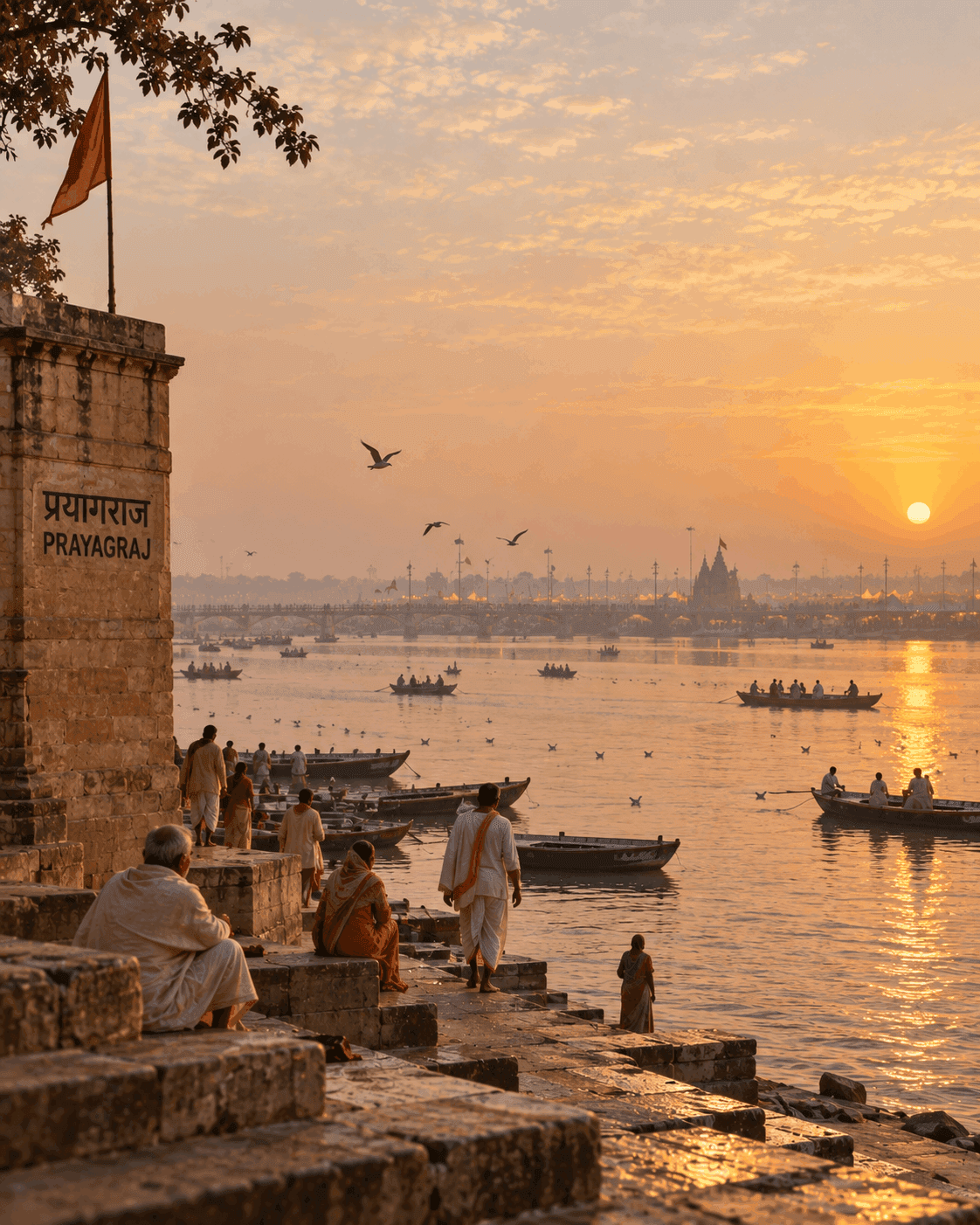
Prayagraj sits at the Triveni Sangam — the confluence of the Ganga, Yamuna, and the unseen Saraswati — regarded as one of the most sacred meeting points in Hindu tradition. It is also the site of the Kumbh Mela, held here on a rotating cycle.
A StayNaut journey to Prayagraj is usually built around a boat out to the confluence itself, and — for many travellers — the rites performed here for parents and ancestors.
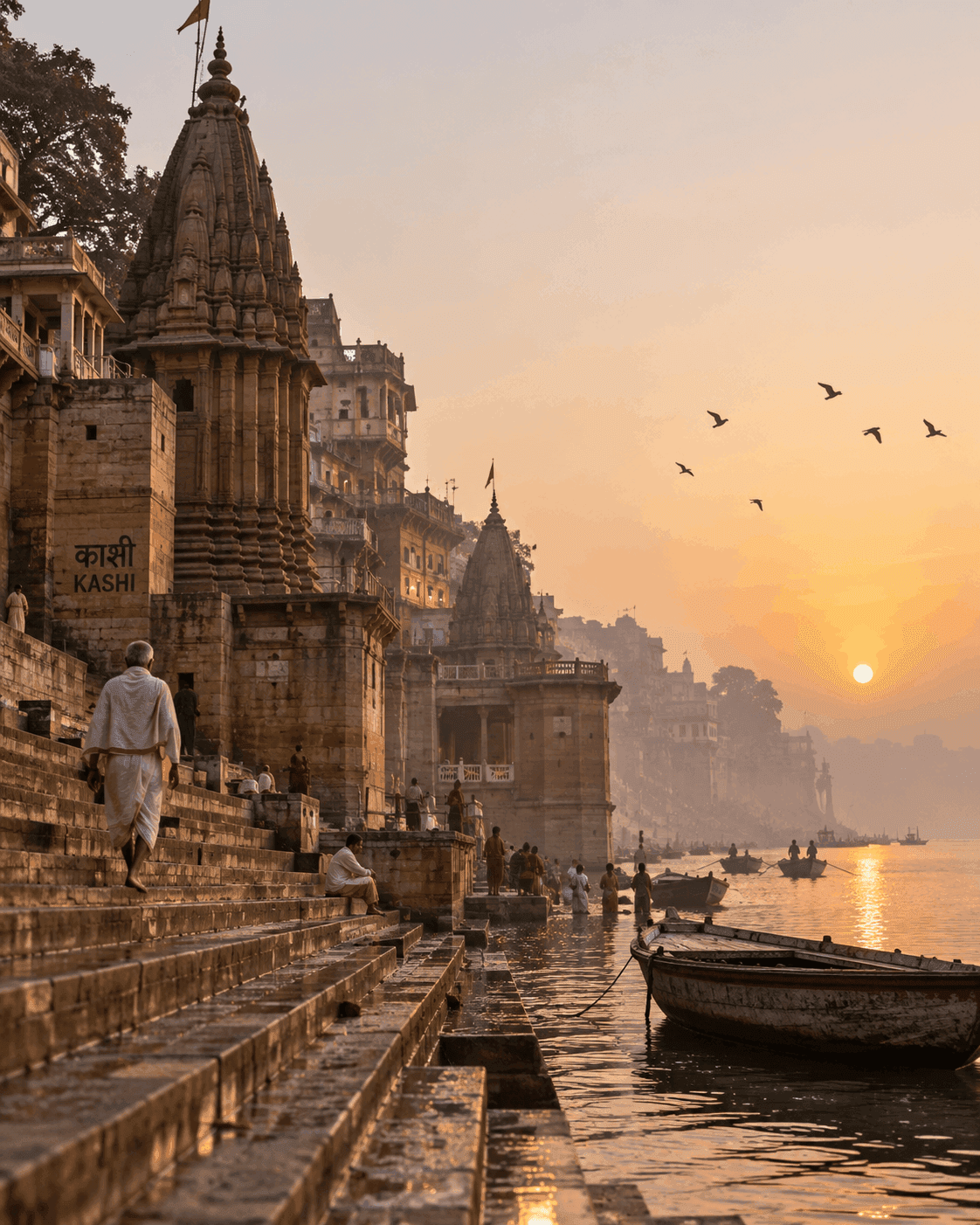
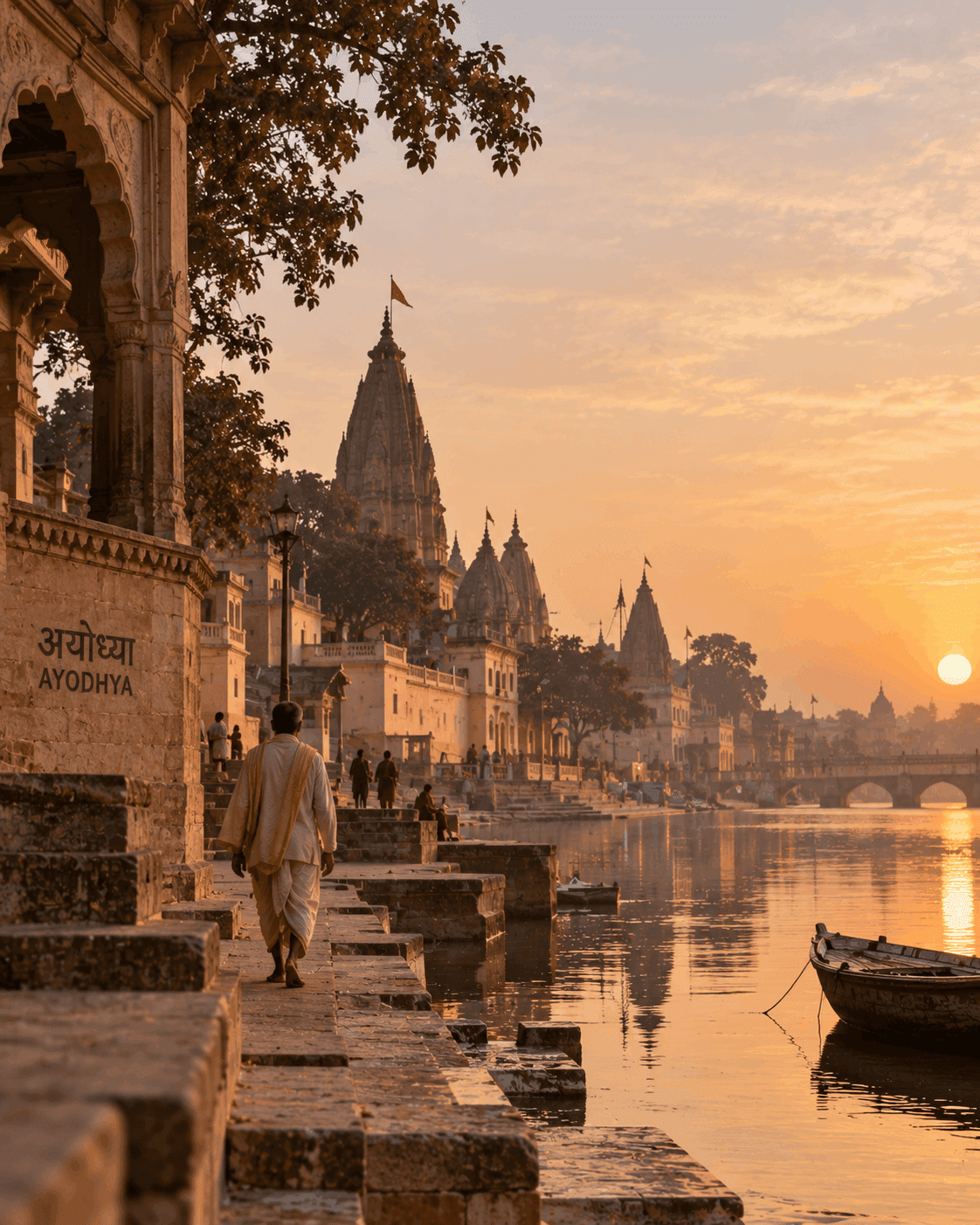
Many travellers come specifically to perform pind daan or tarpan for a parent or ancestor at the Sangam, a ritual with deep roots in Prayagraj's tradition. Others come for a holy dip at the confluence, or to combine Prayagraj with Kashi and Ayodhya on a wider North India pilgrimage.
Spiritual significance
What makes Prayagraj sacred.
The Sangam is described in Hindu scripture as a tirtha of exceptional merit — a dip here is held to cleanse sin accumulated across lifetimes. It is one of the four sites of the Kumbh Mela, the largest peaceful religious gathering in the world.
The city's older name, Prayag, means 'place of sacrifice', and it is closely tied to rites for the departed — pind daan and tarpan performed here are believed to be especially efficacious.
Important sites
Places worth your time.
Triveni Sangam
The confluence point itself, reached by boat, where the Ganga and Yamuna visibly meet and the Saraswati is believed to join unseen.
Akshayavat
An ancient banyan tree inside Prayagraj Fort, held in tradition to be imperishable — its roots referenced in the Ramayana and Mahabharata.
Hanuman Mandir
An unusual temple near the Sangam housing a reclining, rather than standing, image of Hanuman, said to be submerged during the Ganga's annual flooding.
Anand Bhavan
The Nehru family's ancestral home, now a museum — a stop of historical rather than religious significance, for travellers with time to spare.
What StayNaut arranges
What a Prayagraj journey can include.
Most journeys to Prayagraj run one to two days, often as part of a longer route between Kashi and Ayodhya or Chitrakoot, rather than as a standalone destination.
- A boat out to the Triveni Sangam for a holy dip
- Arrangement of pind daan or tarpan with priests StayNaut works with at the Sangam
- A visit to Akshayavat and Prayagraj Fort
- Onward travel arranged to Kashi, Ayodhya, or Chitrakoot
Good to know
Practical considerations.
- The Sangam is reached by boat — river conditions and boat timings vary by season.
- During Kumbh and Magh Mela periods, the city sees exceptionally large crowds; travel here at those times needs to be planned well in advance.
- Rites like pind daan follow specific timing and preparation — worth telling us in advance what you're hoping to perform.
Who this may suit
Is this the right journey for you?
- Families performing rites for a parent or ancestor at the Sangam
- Pilgrims combining Prayagraj with Kashi and Ayodhya
- Travellers timing a visit around the Kumbh or Magh Mela
Common questions
About the Prayagraj journey.
What rites can be arranged at the Sangam?
Pind daan and tarpan are the most commonly requested rites, performed with priests StayNaut works with at the Sangam. Tell us what you're looking to perform when you plan your journey, so timing and preparation can be arranged properly.
Is Prayagraj usually visited on its own?
Not often — most travellers combine it with Kashi and Ayodhya, or with a wider Ramayana route through Chitrakoot. We can arrange it as a standalone visit too, if that's what suits you.
How crowded does Prayagraj get during Kumbh Mela?
Extremely — it's among the largest religious gatherings in the world. If you're planning to visit during Kumbh or Magh Mela, we'd recommend starting the conversation with us well ahead of time.
Start your journey
Your Pilgrimage.
Completely Arranged.
Tell us where you’re thinking of going, who you’re travelling with, or simply what brings you there. We’ll take it from there.
Thoughtfully planned. Personally managed.